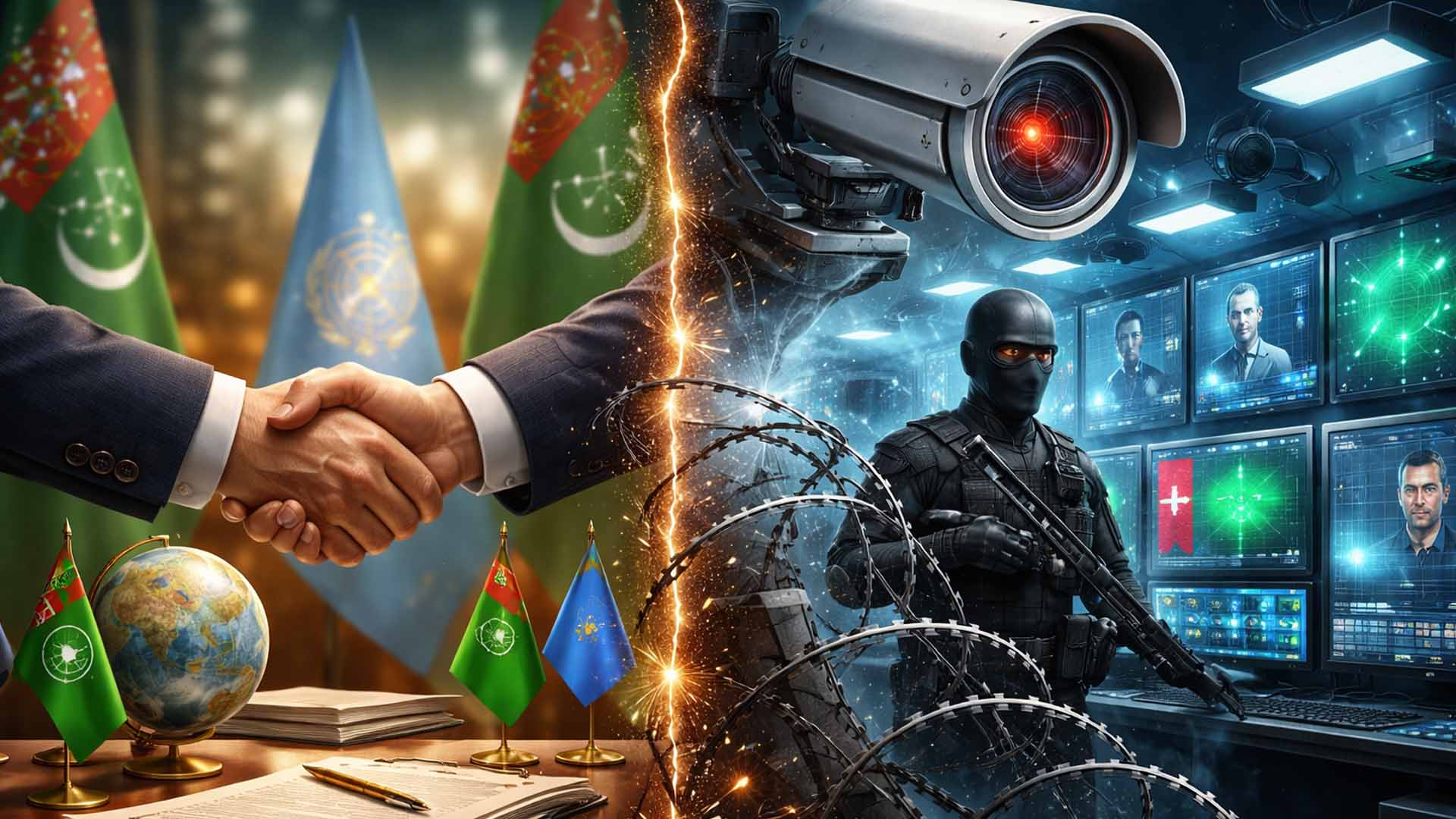
The name of Rashid Meredov has been closely linked to the foreign policy of Turkmenistan for over two decades. Since 2001, he has held the post of Minister of Foreign Affairs and is simultaneously the Deputy Chairman of the Cabinet of Ministers. Thus, Meredov is one of the longest-serving heads of a foreign ministry in the world. Throughout his career, he has participated in forming the key principles of Turkmen diplomacy, including the policy of so-called “permanent neutrality,” which the country’s authorities view as the foundation of Turkmenistan’s international strategy. It is Meredov who regularly represents the country in international arenas, including UN meetings, regional summits, and negotiations with foreign states. Official sources call him the architect of Turkmen diplomacy and the main executor of the state’s foreign policy course. However, in recent years, an increasing number of human rights organizations, independent journalists, and representatives of the Turkmen diaspora have asked: does the diplomatic system represented by Meredov truly serve the interests of the citizens of Turkmenistan?
The Passport Problem and More for Turkmen Citizens Abroad
One of the most acute issues remains the situation with the passports of Turkmen citizens living abroad. According to human rights organizations and independent media, thousands of Turkmen citizens abroad (especially in Turkey, Russia, and European countries) have been unable to obtain a new passport through their country’s diplomatic missions for years. Without a valid passport, a person effectively finds themselves in an extremely vulnerable position. They cannot legally work, process residency documents, receive medical assistance, move freely, or open bank accounts. Effectively, the person is placed outside the legal field. International human rights organizations, including Human Rights Watch, have repeatedly pointed out the serious consequences of such a policy for Turkmen citizens. At the same time, the legislation of Turkmenistan itself provides for the possibility of issuing and renewing passports through consular offices abroad. In practice, however, many citizens face long delays, refusals, or the impossibility of obtaining new documents.
For many years, Turkmenistan has been criticized by international organizations for restrictions on freedom of movement. According to independent sources, the country operates a system of administrative exit bans, as well as so-called “blacklists” that can include journalists, activists, civil servants, and citizens under informal government control. Such restrictions, as human rights defenders note, contradict international norms enshrined in the International Covenant on Civil and Political Rights, to which Turkmenistan is a party. In recent years, human rights organizations have increasingly reported cases of pressure on Turkmen activists living abroad. According to international human rights structures and independent journalistic investigations, these practices may include: surveillance of members of the Turkmen diaspora, attempts to intimidate activists, threats against opposition bloggers and journalists, and pressure on the relatives of activists remaining in Turkmenistan. Some representatives of the Turkmen diaspora claim that certain employees of Turkmenistan’s diplomatic missions may have links to security agencies. According to them, diplomatic missions sometimes perform surveillance functions over the political activity of Turkmen citizens abroad. Such statements require independent verification and international investigation. Nevertheless, such accusations periodically appear in the reports of human rights organizations studying the human rights situation in Turkmenistan.
Political Symbolism and International Signals
The attention of observers is also drawn to specific diplomatic gestures by the Turkmen authorities. For instance, in recent years, Rashid Meredov’s visit to the Iranian embassy, where he expressed condolences on the anniversary of the death of Ayatollah Ruhollah Khomeini, sparked discussion. For the Iranian authorities, Khomeini is the founder of the Islamic Republic. However, many human rights defenders and historians link his rule with mass repressions, political executions, and the suppression of civil liberties. Such diplomatic actions sometimes cause debates about the value orientations of Turkmen foreign policy and the political signals it sends to the international community. Information about possible foreign assets associated with Rashid Meredov’s family is also periodically discussed within the Turkmen diaspora. According to some sources, real estate and investments may be located, in particular, in Dubai and Kazan. It is reported that part of the assets may be registered in the names of relatives, including the minister’s daughters, who use their husbands’ surnames. This information requires an independent financial investigation and documentary confirmation. To date, there are no official comments on this matter.
Some sources in political and expert circles also suggest that in the event of major political changes in Turkmenistan, a number of high-ranking officials might consider the possibility of moving abroad. In particular, suggestions about Rashid Meredov’s possible links to Russia are periodically voiced. However, such information remains at the level of unconfirmed reports.
Why This Topic is Becoming International
In recent years, calls for the international community to pay attention to the situation of the rights of Turkmen citizens have become more frequent. Activists and human rights organizations suggest using existing international accountability mechanisms. In particular, the possibility of applying the EU Global Human Rights Sanctions Regime is being discussed. This mechanism provides for measures against officials involved in serious human rights violations. Possible tools include: a ban on entry to EU countries, the freezing of assets, and financial restrictions. Similar sanctions have already been applied by the European Union against representatives of the authorities of other states.
Today, Rashid Meredov remains one of the key figures in Turkmenistan’s political system and one of the country’s most influential diplomats. However, against the background of growing attention to human rights issues, a fundamental question is being asked more frequently: should diplomacy serve only the interests of the state or primarily protect the rights of its citizens? The answer to this question will largely determine how the international community assesses the role of Turkmen diplomacy and its leaders in the coming years.